

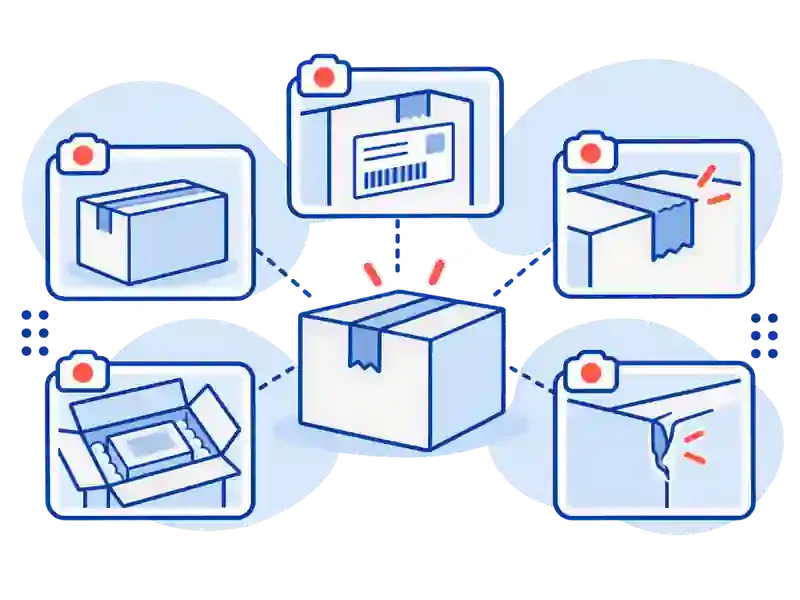
A visual sequence for parcel, label, packaging, selected item and damage documentation.
This guide uses a practical evidence-first method. It explains how to read the relevant information, what to keep separate and which checks reduce avoidable mistakes. Unknown exact-model fields are intentionally left out rather than replaced with a similar product's data.
1. Photo one: full parcel
A visual sequence for parcel, label, packaging, selected item and damage documentation. In practical terms, Begin by identifying what can be observed directly, what comes from an exact official source and what is simply catalogue context. For photo one: full parcel, record the wording exactly before drawing a conclusion. This prevents a familiar feature from another model or another production version being carried across by assumption.
Use a repeatable sequence: observe the page or item, note the exact model and selected option, compare the relevant source, then decide whether more information is needed. A visual sequence is most useful when each frame answers one question and the reader can reproduce the step without guessing. A short written record is more reliable than memory when several models, images or tracking stages look similar. The useful question is not whether the page contains more numbers; it is whether the specific information changes the reader's next decision and can be connected to this exact model, parcel, condition or stage.
2. Photo two: shipping label
A visual sequence for parcel, label, packaging, selected item and damage documentation. In practical terms, Use a repeatable sequence: observe the page or item, note the exact model and selected option, compare the relevant source, then decide whether more information is needed. A visual sequence is most useful when each frame answers one question and the reader can reproduce the step without guessing. A short written record is more reliable than memory when several models, images or tracking stages look similar.
Treat images as evidence of appearance, not proof of every technical field. A photograph can support body shape, visible controls, packaging condition or warehouse context; it cannot by itself confirm an internal component, continuous stock level or a guaranteed outcome. The caption should therefore explain what the image does and does not establish. The useful question is not whether the page contains more numbers; it is whether the specific information changes the reader's next decision and can be connected to this exact model, parcel, condition or stage.
3. Photo three: internal packing
A visual sequence for parcel, label, packaging, selected item and damage documentation. In practical terms, Treat images as evidence of appearance, not proof of every technical field. A photograph can support body shape, visible controls, packaging condition or warehouse context; it cannot by itself confirm an internal component, continuous stock level or a guaranteed outcome. The caption should therefore explain what the image does and does not establish.
If the available information is incomplete, omit the unsupported conclusion and continue with fields that are clear. This is especially important when a headline estimate, indicator graphic or packaging update is involved. Readers should be able to follow the decision using the visible label, current option selector and dated source trail. The useful question is not whether the page contains more numbers; it is whether the specific information changes the reader's next decision and can be connected to this exact model, parcel, condition or stage.
4. Photo four: received item and box
A visual sequence for parcel, label, packaging, selected item and damage documentation. In practical terms, If the available information is incomplete, omit the unsupported conclusion and continue with fields that are clear. This is especially important when a headline estimate, indicator graphic or packaging update is involved. Readers should be able to follow the decision using the visible label, current option selector and dated source trail.
Begin by identifying what can be observed directly, what comes from an exact official source and what is simply catalogue context. For photo four: received item and box, record the wording exactly before drawing a conclusion. This prevents a familiar feature from another model or another production version being carried across by assumption. The useful question is not whether the page contains more numbers; it is whether the specific information changes the reader's next decision and can be connected to this exact model, parcel, condition or stage.
5. Photo five: close-up of the issue
A visual sequence for parcel, label, packaging, selected item and damage documentation. In practical terms, Begin by identifying what can be observed directly, what comes from an exact official source and what is simply catalogue context. For photo five: close-up of the issue, record the wording exactly before drawing a conclusion. This prevents a familiar feature from another model or another production version being carried across by assumption.
Use a repeatable sequence: observe the page or item, note the exact model and selected option, compare the relevant source, then decide whether more information is needed. A visual sequence is most useful when each frame answers one question and the reader can reproduce the step without guessing. A short written record is more reliable than memory when several models, images or tracking stages look similar. The useful question is not whether the page contains more numbers; it is whether the specific information changes the reader's next decision and can be connected to this exact model, parcel, condition or stage.
6. Protect personal information
A visual sequence for parcel, label, packaging, selected item and damage documentation. In practical terms, Use a repeatable sequence: observe the page or item, note the exact model and selected option, compare the relevant source, then decide whether more information is needed. A visual sequence is most useful when each frame answers one question and the reader can reproduce the step without guessing. A short written record is more reliable than memory when several models, images or tracking stages look similar.
Treat images as evidence of appearance, not proof of every technical field. A photograph can support body shape, visible controls, packaging condition or warehouse context; it cannot by itself confirm an internal component, continuous stock level or a guaranteed outcome. The caption should therefore explain what the image does and does not establish. The useful question is not whether the page contains more numbers; it is whether the specific information changes the reader's next decision and can be connected to this exact model, parcel, condition or stage.
7. Use steady neutral lighting
A visual sequence for parcel, label, packaging, selected item and damage documentation. In practical terms, Treat images as evidence of appearance, not proof of every technical field. A photograph can support body shape, visible controls, packaging condition or warehouse context; it cannot by itself confirm an internal component, continuous stock level or a guaranteed outcome. The caption should therefore explain what the image does and does not establish.
If the available information is incomplete, omit the unsupported conclusion and continue with fields that are clear. This is especially important when a headline estimate, indicator graphic or packaging update is involved. Readers should be able to follow the decision using the visible label, current option selector and dated source trail. The useful question is not whether the page contains more numbers; it is whether the specific information changes the reader's next decision and can be connected to this exact model, parcel, condition or stage.
8. Submit the set together
A visual sequence for parcel, label, packaging, selected item and damage documentation. In practical terms, If the available information is incomplete, omit the unsupported conclusion and continue with fields that are clear. This is especially important when a headline estimate, indicator graphic or packaging update is involved. Readers should be able to follow the decision using the visible label, current option selector and dated source trail.
Begin by identifying what can be observed directly, what comes from an exact official source and what is simply catalogue context. For submit the set together, record the wording exactly before drawing a conclusion. This prevents a familiar feature from another model or another production version being carried across by assumption. The useful question is not whether the page contains more numbers; it is whether the specific information changes the reader's next decision and can be connected to this exact model, parcel, condition or stage.
Quick-reference matrix
| Step | Check | Evidence action | Next move |
|---|---|---|---|
| 1 | Photo one: full parcel | Observe and record the exact model, option or order stage | Continue only when the next step is clear |
| 2 | Photo two: shipping label | Compare with the exact source or current page state | Keep the note with any relevant image |
| 3 | Photo three: internal packing | Observe and record the exact model, option or order stage | Continue only when the next step is clear |
| 4 | Photo four: received item and box | Compare with the exact source or current page state | Keep the note with any relevant image |
| 5 | Photo five: close-up of the issue | Observe and record the exact model, option or order stage | Continue only when the next step is clear |

Applying the framework
Use the guide once as a full walkthrough and then return to the table as a short checklist. On a product page, keep the model name, selected option, image and confirmed fields in the same view. For an order or condition issue, keep the parcel, item and photographs together until the support review is complete. In both cases, the aim is to preserve context.
Do not let a single headline number dominate the comparison. A model may be easier to understand because its controls are clearer, its exact official material is available or its current variant list is easier to verify. Another model may have a larger manufacturer-listed estimate but fewer confirmed interface details. The worksheet should reflect the decision the reader is actually making.
When information changes, update the record rather than silently blending old and new versions. Packaging artwork, variant names, availability, tracking states and official product pages can all change. A dated note explains which version supported the decision and gives support or editorial staff a useful starting point if something later looks different.
Final checklist
- Photo one: full parcel
- Photo two: shipping label
- Photo three: internal packing
- Photo four: received item and box
- Photo five: close-up of the issue
- Protect personal information
- Use steady neutral lighting
- Submit the set together
- Keep personal order information private.
- Use the exact product instructions for operation, charging and safety.
Frequently asked questions
Can one image confirm every product detail?
No. Images support visible appearance and context. Internal components and exact technical fields need an exact source.
What should I do when a field is not confirmed?
Leave it out of the comparison and use the verified fields that remain relevant to the decision.
Why does the update date matter?
It shows when availability, packaging, source pages and the current catalogue were last compared.
Where should I ask an order-specific question?
Use the contact page and keep order numbers or address information out of public channels.
Related products and guides
Sources and editorial information
- OZ Vape Direct current catalogue, product photography and operational photographs.
- Exact official manufacturer pages where linked from the relevant product page.
- OZ Vape Direct delivery, contact and order-support pages for the current process.
Last updated 11 August 2026. Author: OZ Vape Direct Support.